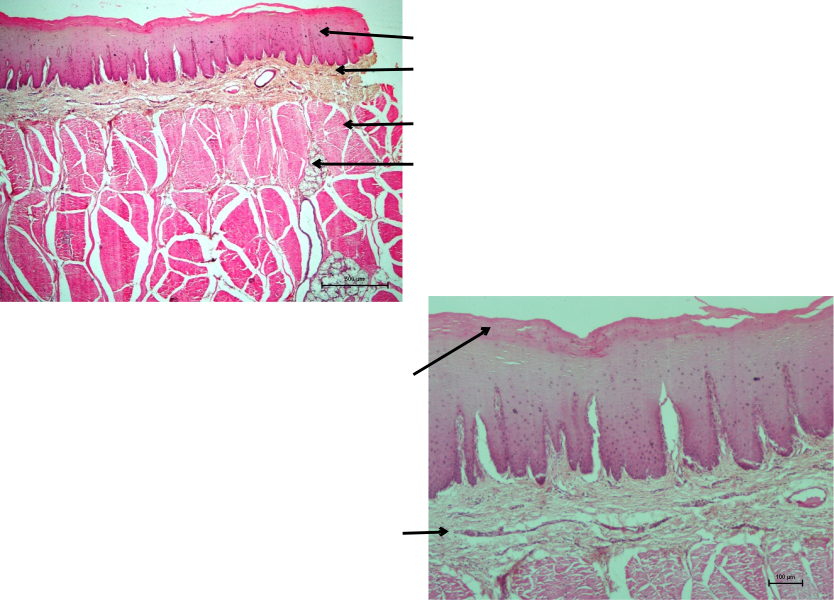
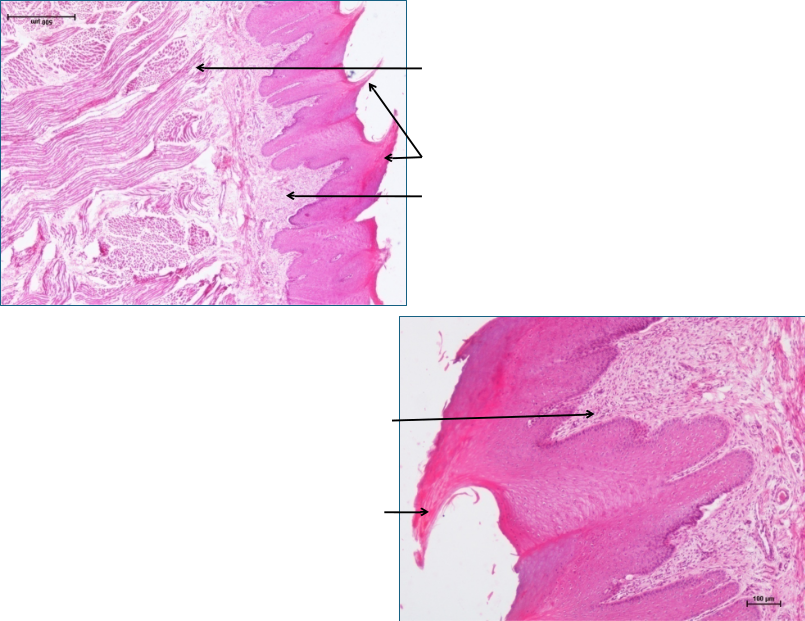
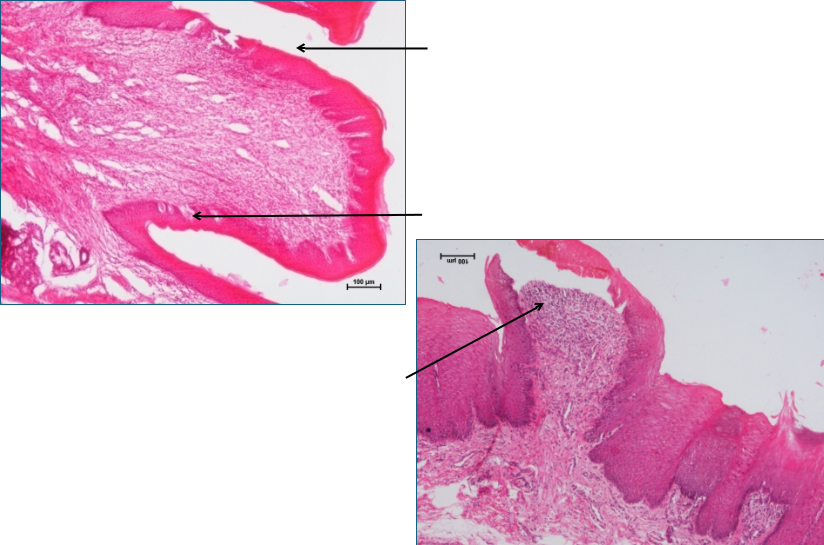
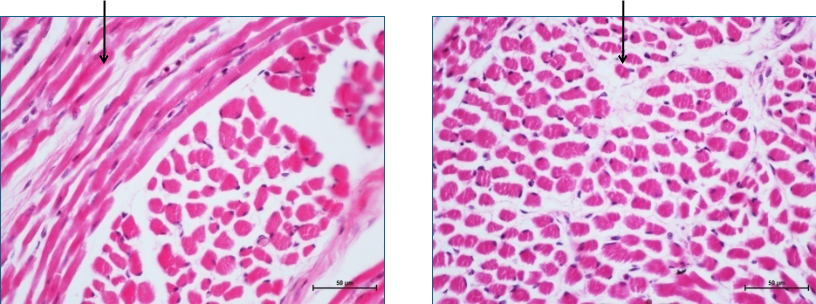
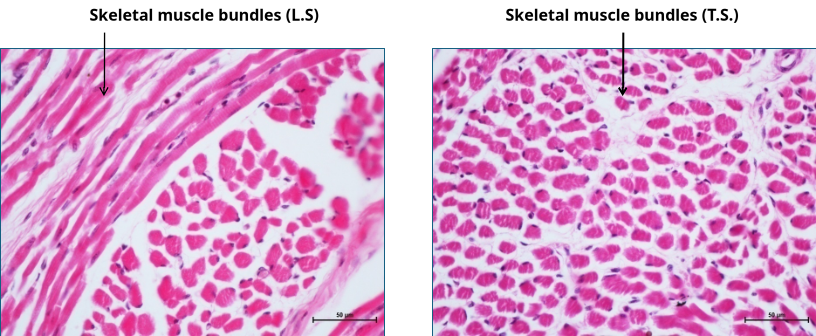
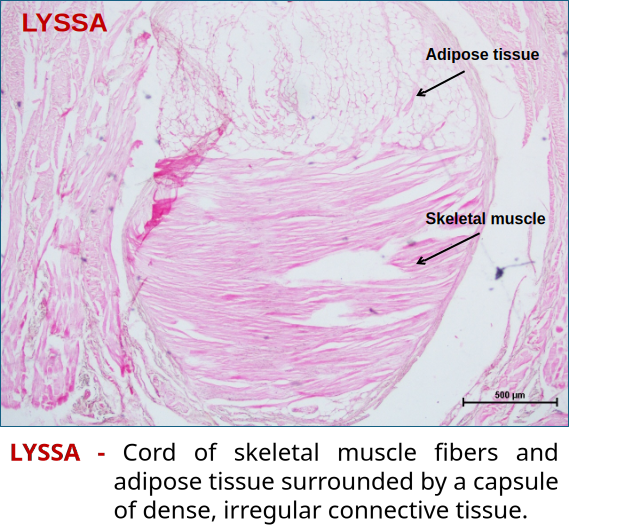
TONGUE: Muscular organ covered by a mucous membrane
-
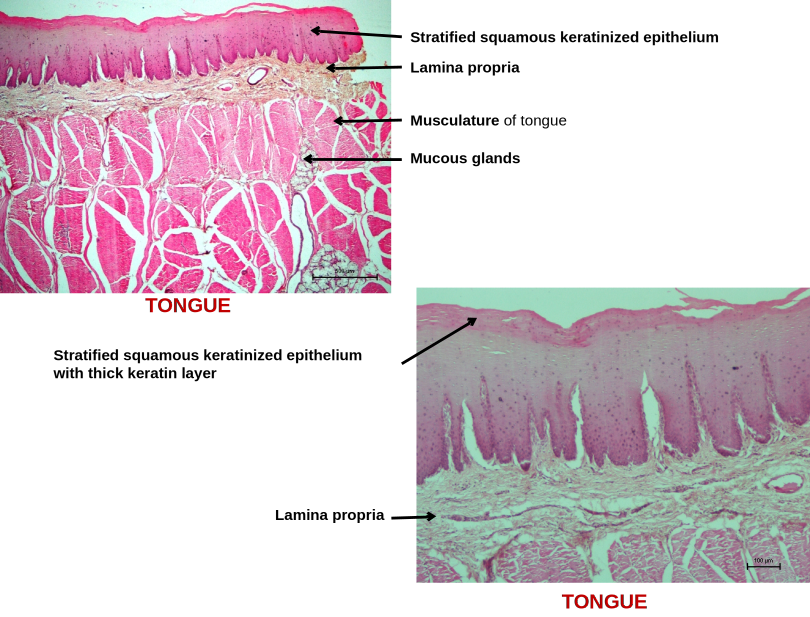
Dorsal lingual surface covered by stratified squamous keratinized epithelium. The surface bears macroscopic mechanical and gustatory papillae, supported by dense irregular connective tissue.
Mechanical papillae:
1.
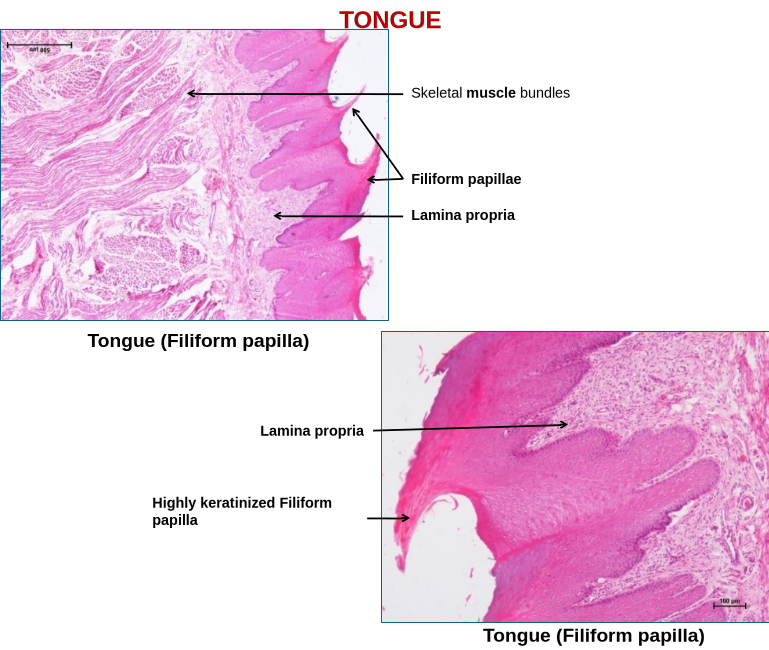
Filiform papillae- Thread-like or cone-shaped, highly keratinized with a caudally directed apex. Covered with stratified squamous keratinized epithelium. In equines, thread-like caudally directed extensions. In dog two or more prominences of unequal size.
2.
Conical papillae- Present on the base of the tongue in the dog, cat, pig, and ruminants. Similar to buccal papillae. Larger and less keratinized than filiform papillae, having primary and secondary connective tissue papillae.
3.
Lenticular papillae- present as flattened projections of low height on the torus linguae in ruminants.
Gustatory papillae: Contain taste buds
1.
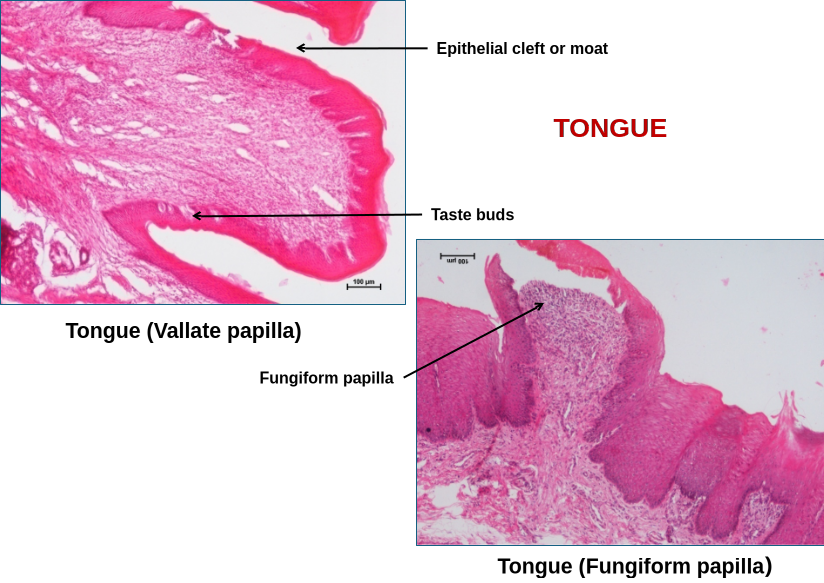
Fungiform papillae- Mushroom-shaped papillae which project above the surface of the tongue. Lined by non-keratinized or (slightly keratinized) stratified squamous epithelium. Taste buds are present on upper surface and number is less in cattle and abundant in goat and carnivores.
2.
Vallate (circumvallate papillae)- Located on the dorsal surface anterior to the root of the tongue. Large flat structures are completely surrounded by an epithelial-lined cleft or moat. Ducts of serous secretory glands open into the moat, releasing secretions that dissolve substances for taste perception and flushing of moat.
3.
Foliate papillae- Absent in ruminants but present in horses. Consists of a series of parallel mucosal folds with taste buds on the sides. Ducts of serous gustatory glands open into furrows separating folds.
Taste buds: Consist of a cluster of spindle-shaped epithelial cells that extend from the basal lamina to the taste pore at the epithelial surface. Each taste bud is composed of spindle-shaped gustatory cells in the center, having chemoreceptor properties, surrounded by supporting cells.
The ventral surface lacks papillae and is covered by non-keratinized epithelium.