-
-
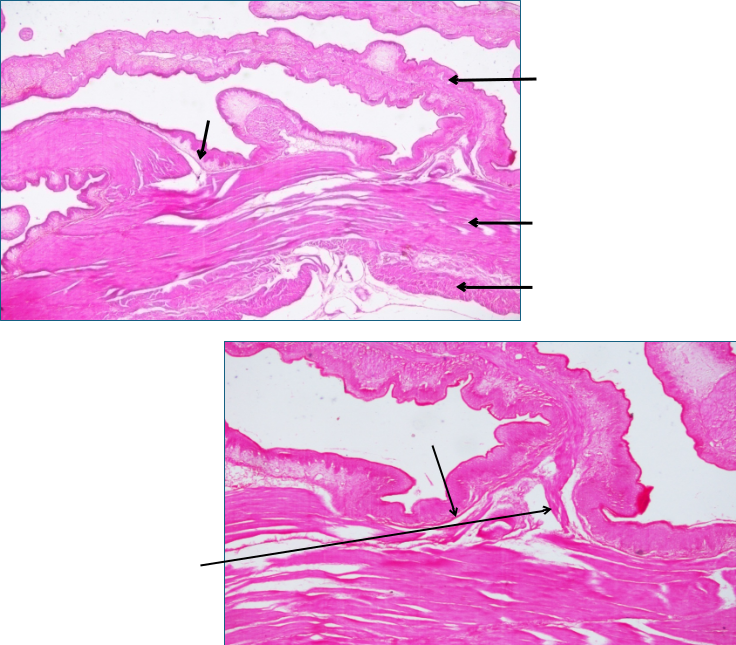
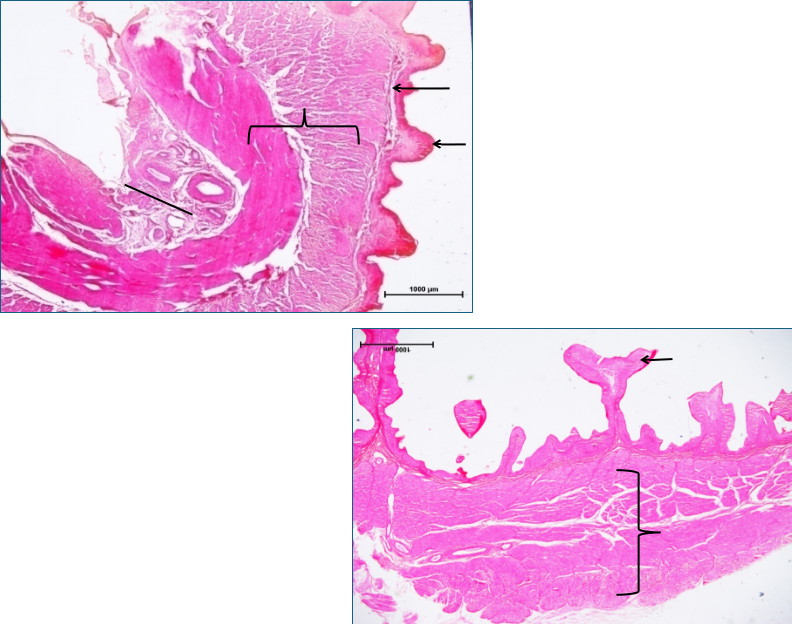
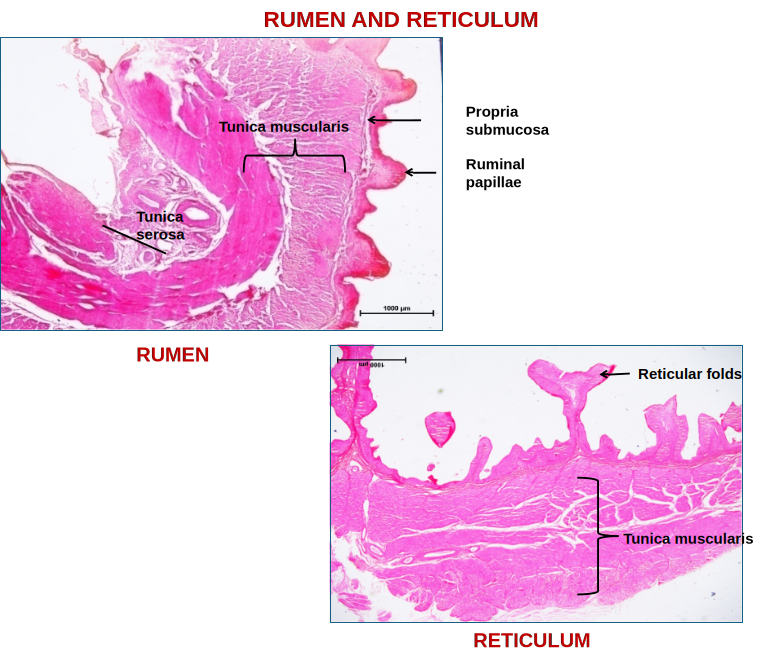
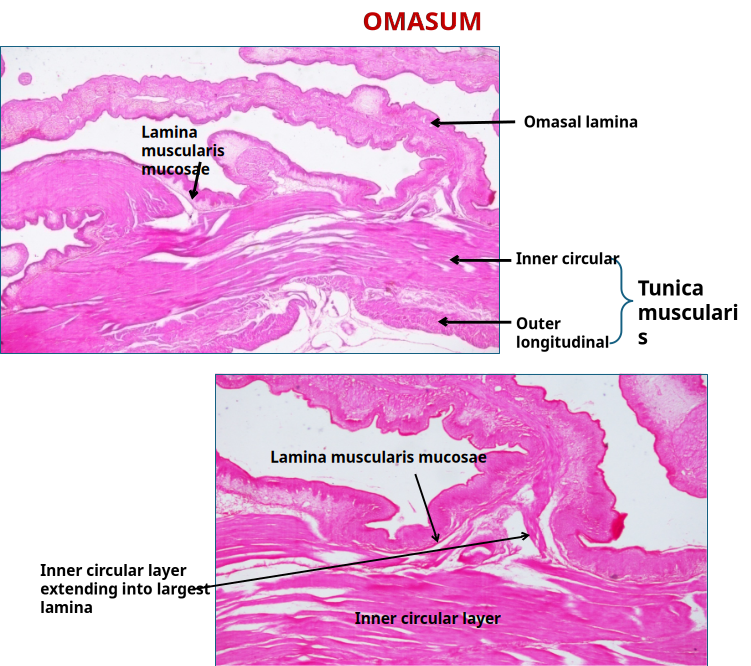 Ruminant Stomach: The ruminant stomach comprises the nonglandular part or forestomach and the glandular part called the abomasum. The rumen, reticulum, and omasum comprise the forestomach.Rumen:Tunica mucosa-•Characterized by small tongue-shaped smooth papillae having a connective tissue core.•Lamina epithelialis is stratified squamous keratinized.•Lamina muscularis mucosae is absent, so lamina propria blends into submucosa, forming propria submucosa.Tunica muscularis - comprises the inner circular and outer longitudinal layers of smooth muscle cells. Follow an oblique course and may cross each other at a right angle.Tunica serosa- outer connective tissue layer lined by mesothelium.Reticulum: Reticular mucosa has permanent anastomosing folds, giving it a honeycomb appearance. The folds are of two different heights covered by small conical papillae.Tunica mucosa-a)Lamina epithelialis is a stratified squamous keratinized epithelium resembling rumen.b)Lamina muscularis mucosae is comprised of strands of smooth muscle near the margin of folds.c)Propria submucosa is formed of a network of connective tissue fibers.Tunica muscularis- Consists of two layers of smooth muscle fibers that cross at a right angle.Omasum: Consisted of 100 longitudinal laminae of variable length. Laminae are of 4-5 orders and are formed by mucosal folds and portion of tunica muscularis. Papillae are present on the surface of laminae.Tunica mucosa- Lamina epithelialis is stratified squamous keratinized. The lamina propria contains connective tissue fibers and a capillary network. Tunica submucosa- connective tissue layer.•Lamina muscularis mucosae is present and extends on both sides of the lamina.Tunica muscularis -Outer thin longitudinal and inner thick circular layer, which extends into the largest laminae.