The integument is the largest organ of the body.
It consists of two components:
2.
The epidermal derivatives (nails, hair, and glands (sweat and sebaceous glands and the mammary gland).
The functions of skin are:
1.
Protection from injury
2.
Water barrier to prevent dehydration.
3.
Regulation of body temperature
6.
Synthesis of vitamin D
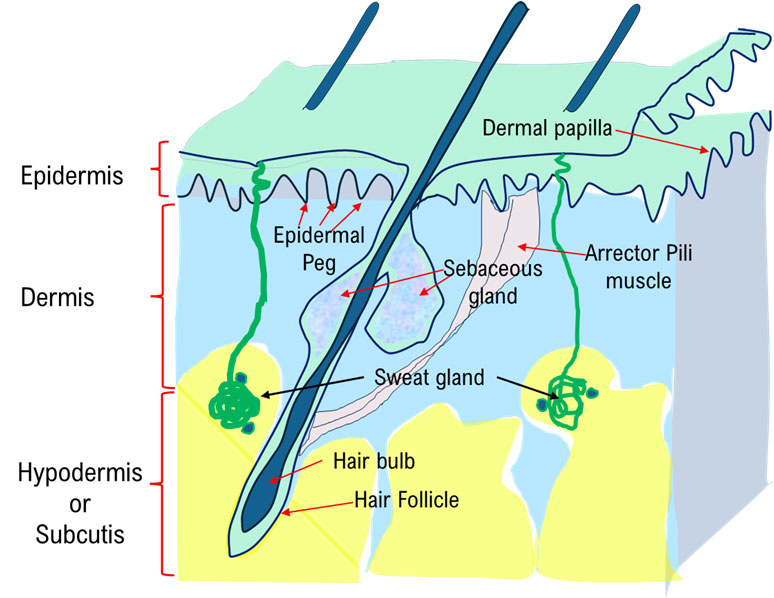
The skin has three main layers:
1.
Epidermis: continuously proliferating stratified squamous epithelium
2.
Dermis: fibrous and fibroadipose tissue, supporting the epidermis, contains blood vessels, nerves, and sensory receptors.
3.
Subcutis or hypodermis or panniculus: layer beneath the dermis and usually consists of adipose tissue with supporting fibrous bands. This layer contains the larger vessels that supply and drain the dermal blood vasculature.