-
-
BONE
Bone gives internal support to the entire body and provides attachment to muscles and tendons necessary for movement.
Difference from Cartilage: Has canalicular system. A direct vascular supply. Bone grows only by apposition because the intercellular substances calcifies so rapidly that Interstitial growth of bone is not possible.
Different cell types of bone
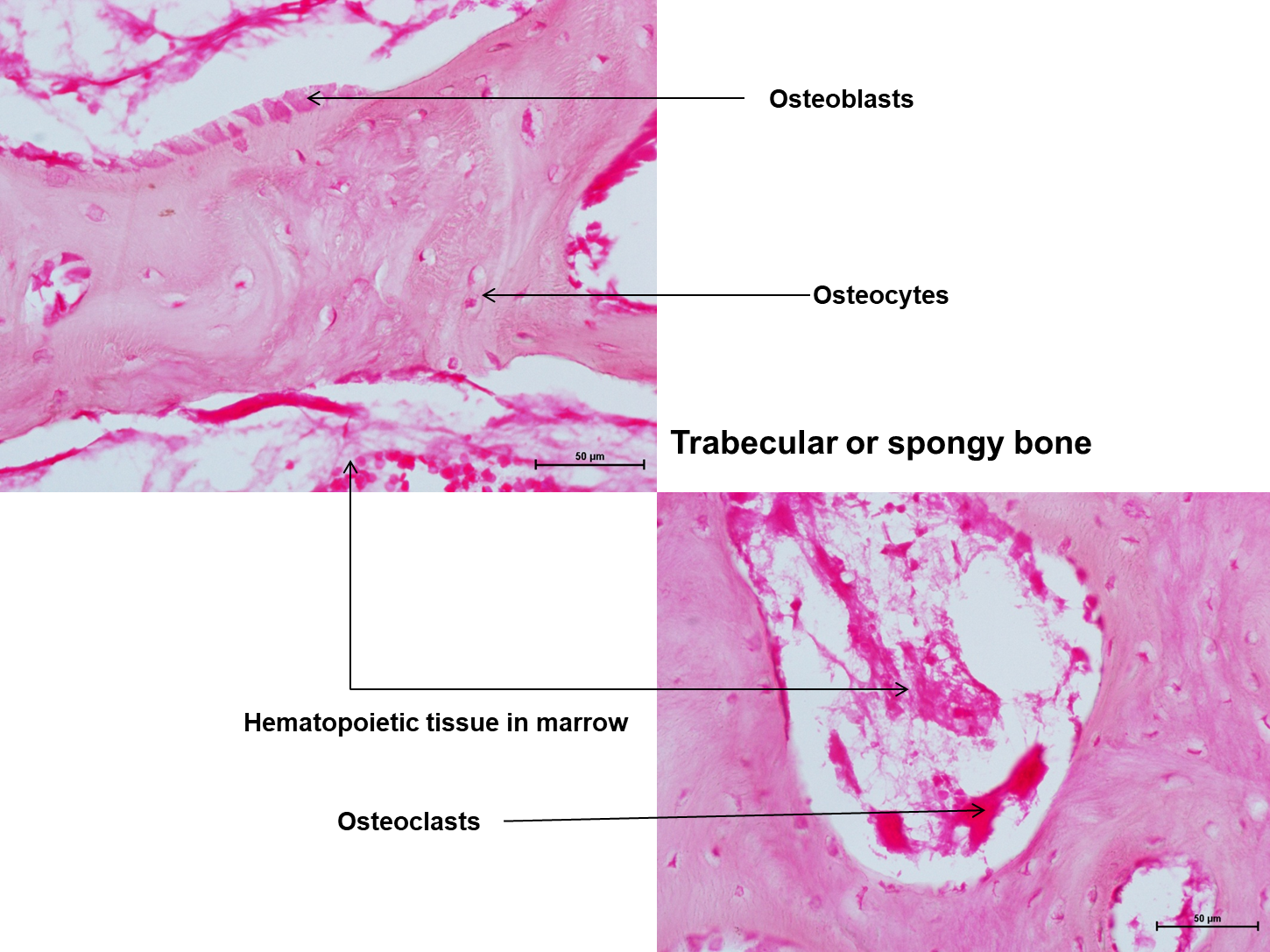
- Osteoblast: are spherical cells, having basophilic cytoplasm, well-developed RER, prominent Golgi complex, long cytoplasmic processes having actin filaments. These osteoblasts synthesize and secrete an organic matrix called matrix vesicles, which are formed along the cell margin and pinched off. These vesicles contain lipids, calcium and AKPase activity required to intimate and maintain the process of mineralization.
- Osteocytes: principal cell of mature bone and reside in a lacuna. Having long slender processes. The long processes have the capability to shorten and lengthen. This actually may serve as a pump to move fluid through lacunae and canaliculi to transfer the metabolite. The cells have a large no. of lysosomes. Lysosomal enzymes may help maintain the matrix's mineral content.
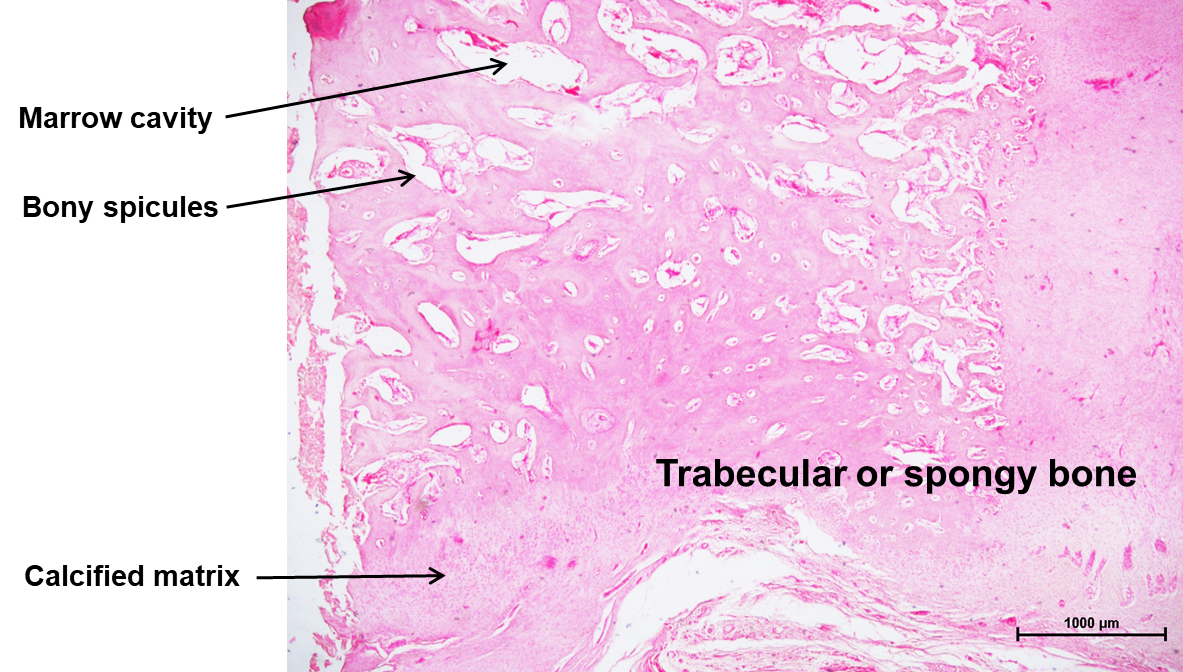
- Osteoclasts: these are multinucleated cells responsible for bone resorption. The process occurs when these cells are stimulated by parathyroid hormone. These cells originate from blood monocytes and enter the site of future bone by way of capillaries. Several monocytes fuse to form large multinucleated cells; 40-70 µm in size which 15-30 nuclci are usually seen on bony spicules
-
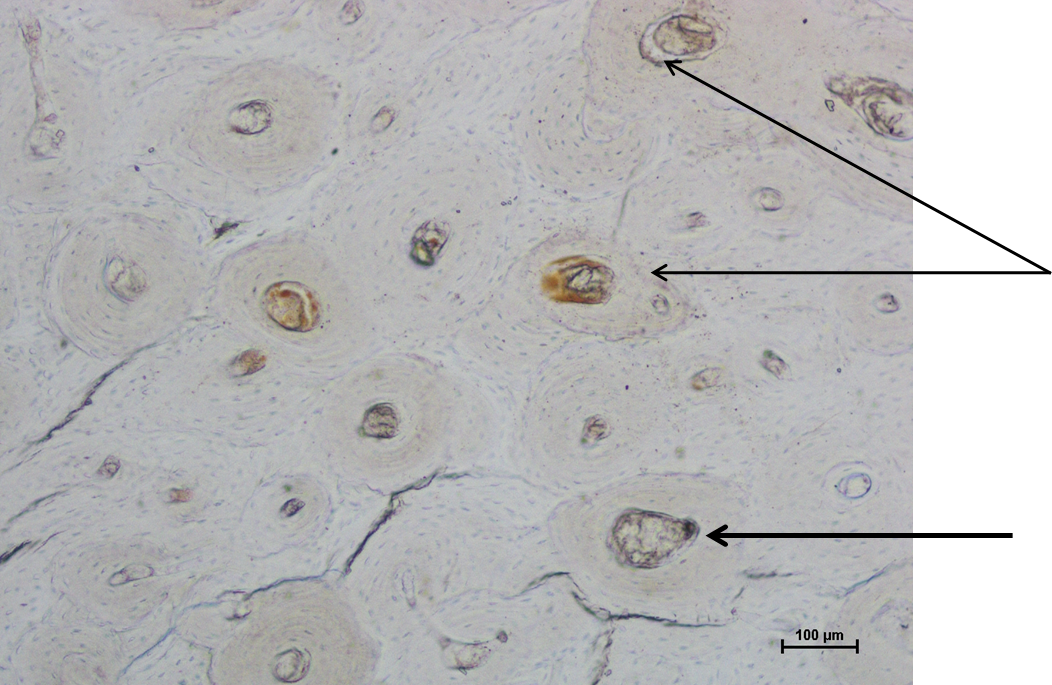
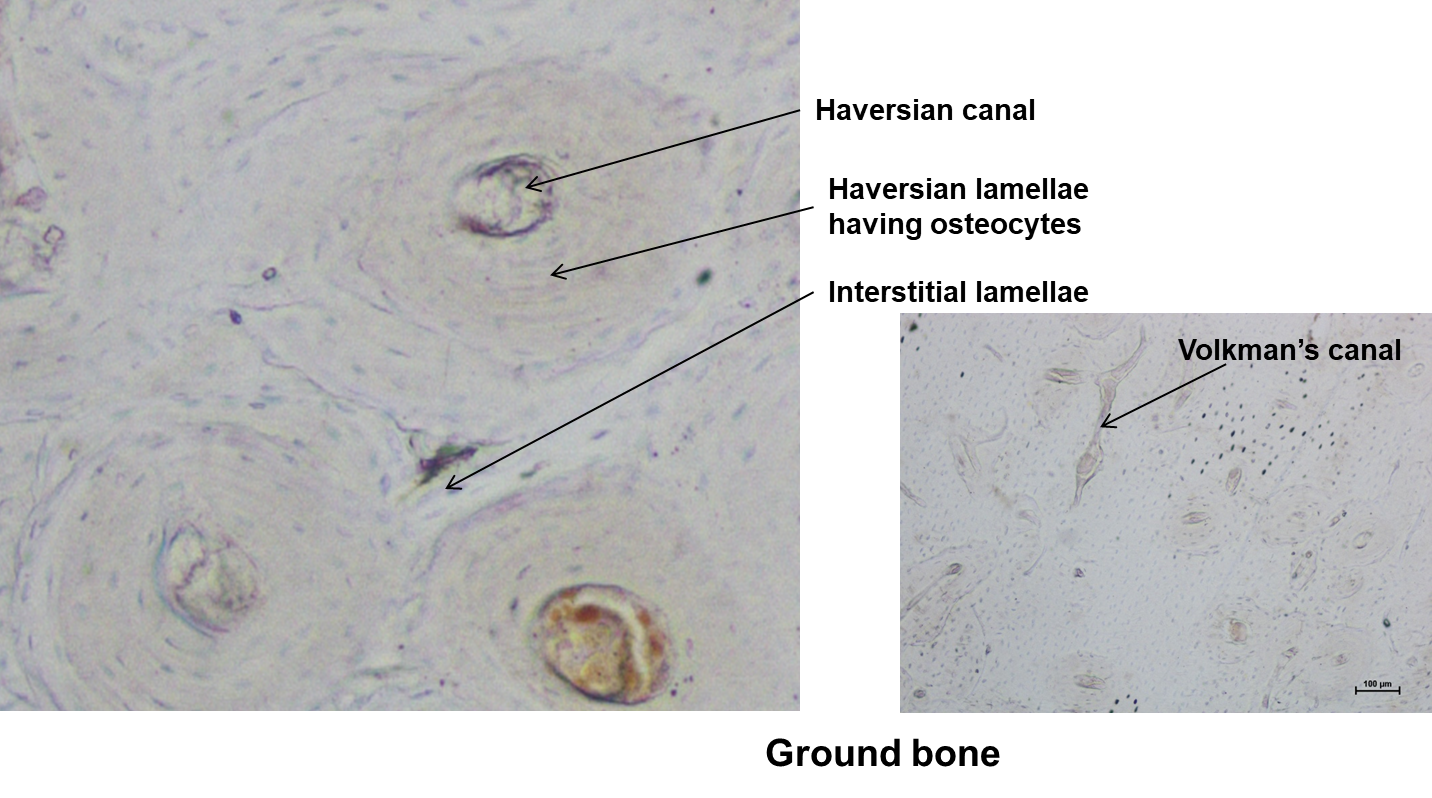
Ground Bone
-
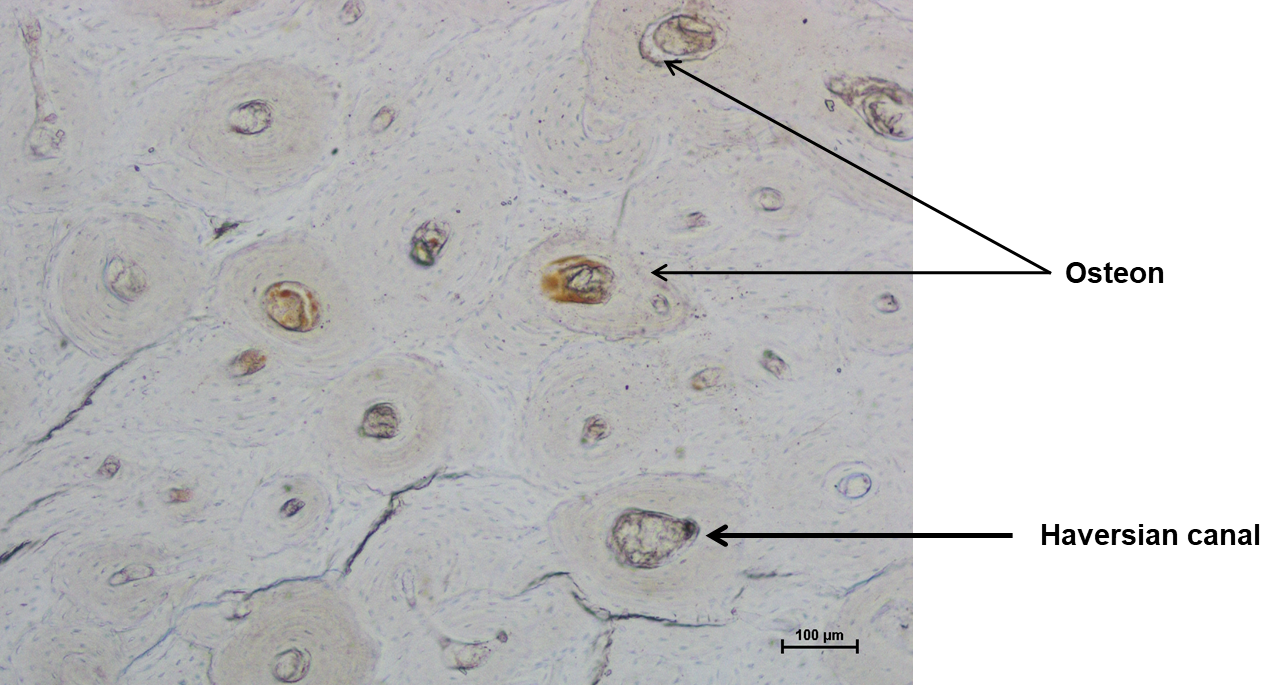
- Concentric/Haversian
- Interstitial
- Circumferential